
PROCESS
working with us

1. project establishment
This stage involves collecting information on your brief and the site. We will meet with you to discuss your site and what you want your house to be both functionally and how you would like it to look and feel. We talk about how you live, how your family relates to each other, any special needs or ideals and what you like in other spaces you have been in. From this discussion we will set out a brief for you to consider and possibly build on. From you, we will require a copy of the certificate of title for your property and advice on any legal restrictions which apply to it, for example, rights-of-way, easements and covenants. Generally a number of visits to the site are required to look at the lay of the land, views, sunlight and neighbouring properties and to get a general feel for how the house will sit in its environment. We will look at the wind zone, flood zones and depending on the type of project, a topographical survey may also need to be carried out. This is done by a land surveyor and we can brief them as to what is required for the project. Ground testing might also be necessary to determine the type of foundations, this can be carried out by a separate consultant, usually a structural engineer, who we can brief and liaise with. This is typically carried out after the concept design is established so that we know where to test. The relevant council District Plan will be consulted to determine if there are any likely triggers for requiring a Resource Consent and depending on what these triggers might be the land survey information might also be required to confirm this. A broad look at the relevant plans is included in this stage and once design work is underway these are considered in more detail.

2. concept design
During this stage a concept design responding to the brief is produced taking into consideration the opportunities and constraints of the brief and site. As the concept design is generated we start to make general assessments of how the design sits in relation to the District Plan rules. This work will be in the form of sketch plans and elevations and/or 3D drawings depending on what suits the scheme best. We usually produce an option showing the house configuration for discussion. After this point any major revisions to the sketch design would be carried out at the architectural hourly rate noted in the attached agreement.

3. preliminary design
During the preliminary design stage, the concept design is worked up to a point where it can be confirmed whether Resource Consent is required, and so that it can be issued to a quantity surveyor or a builder for a cost estimate. The Preliminary Design documentation typically includes an outline specification together with annotated preliminary drawings, which describe proposed key materials, construction types and options or proposals for sustainable design aspects.
4. resource consent
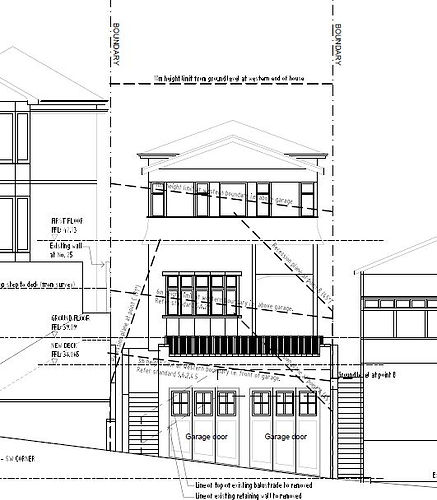
Under the Resource Management Act 1991 (RMA) each council has a District Plan which sets out the objectives for the area’s resources. Part of this includes the built environment and there are a set of rules and standards that building work must either comply with or, if not, must seek a resource consent and as part of that prove that the building work is not detrimental to the environment or mitigate any effects of that building work. This may be required if the proposed design infringes on any relevant District Plan rule or standard e.g. for height restrictions, site coverage, open space requirements to name a few. There have been some recent changes to the RMA which mean some infringements can now be deemed boundary activities where you will require neighbours approval and the application process is much simpler.

5. design development
During this stage, we begin to refine the design further, incorporating your comments and feedback from the previous stages, coordinating requirements with other consultants (e.g. structural engineer) at a finer scale, and fine-tuning the design for various aesthetic and technical considerations. If required, a Structural Engineer will be engaged as a separate consultant to carry out structural design and calculations for inclusion in the building consent and the construction documents. There may be other consultants involved dependent on site/design specific considerations. As suited to the process, this will often be the point where we begin looking more closely at aspects such as the materials used and construction type and detailing. During this stage, the design will be developed to a point where it can form the foundation from which construction and consent documentation can be generated, though these two stages do tend to run concurrently.

6. documentation
This stage includes producing working drawings, construction details, a specification and Building Code compliance documents. The document set will typically include drawings and other documents such as: Location and Site Plan Proposed foundation plan Proposed floor plan Proposed floor and roof framing plans Proposed structural plan Proposed roof plan Proposed drainage drawings Proposed electrical, lighting and finishes plans Proposed elevations Sections showing construction types Door and Window schedules Construction details Joinery drawings if required. Bathroom drawings if required. Specifications Building Consent application form. New Zealand Building code information required for building consent. During this stage the architectural documents will be coordinated with and incorporate detail from applicable separate consultants’ work. Once the documentation set is ready, an application for Building Consent is compiled and submitted. Under the Building Act 2004 most building work will require a building consent application. This is separate and different to a Resource Consent. An application will generally include the following: application forms, proof of ownership, Architectural drawings, specifications, other consultants work (e.g. Structural Engineer), product appraisals, certificates of design work, fee deposit. The Building Consent Authority (normally your local city council) have a statutory obligation to process the consent in 20 working days but this can be extended if they deem that additional information is required.